
Asimov
by Haltia.AI
A UAE-based AI startup building a privacy-first personal assistant that runs entirely on-device with no cloud dependency. Consumer and enterprise, across the Apple ecosystem.
Snapshot
- Role
- Lead Product Designer
- Team
- ~6 people when I joined
- Reported to
- CEO and CTO
- Platforms
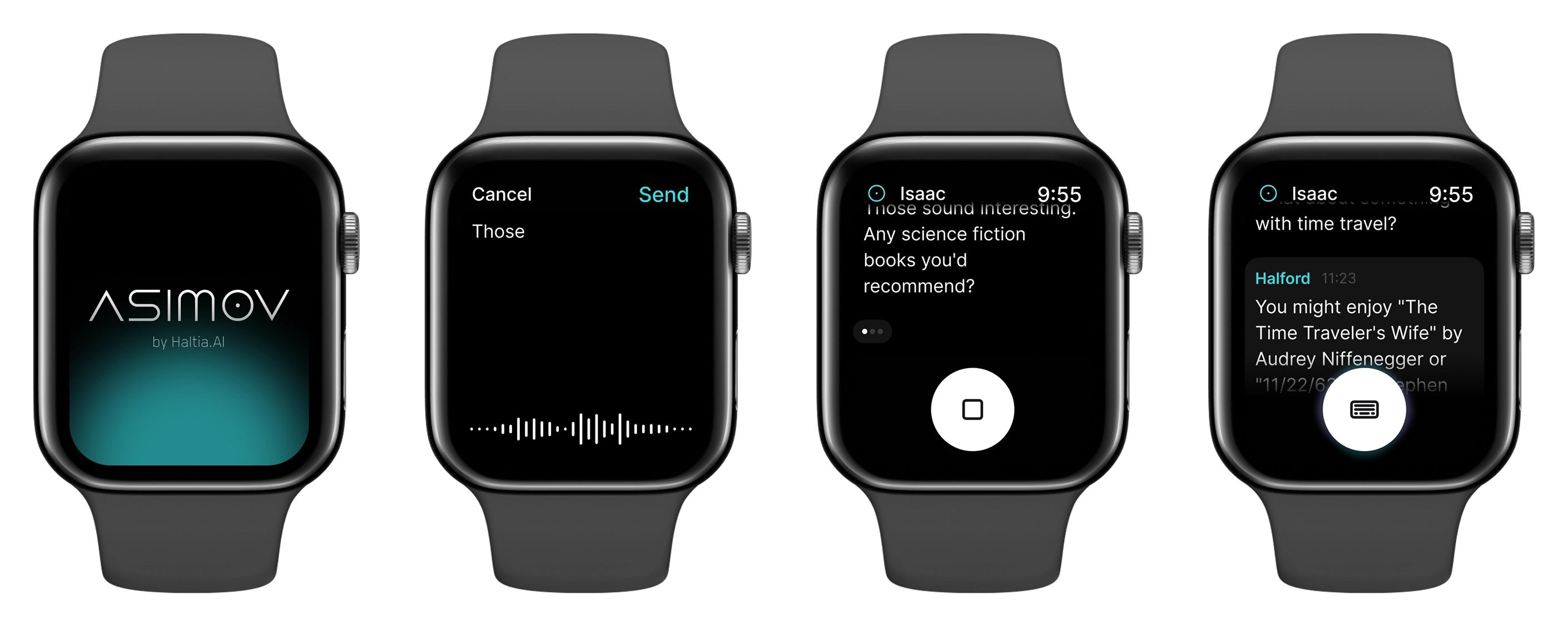
- iOS, iPadOS, macOS, watchOS
- Built with
- Flutter, single codebase
- Duration
- 1 year 3 months
Context and Challenge
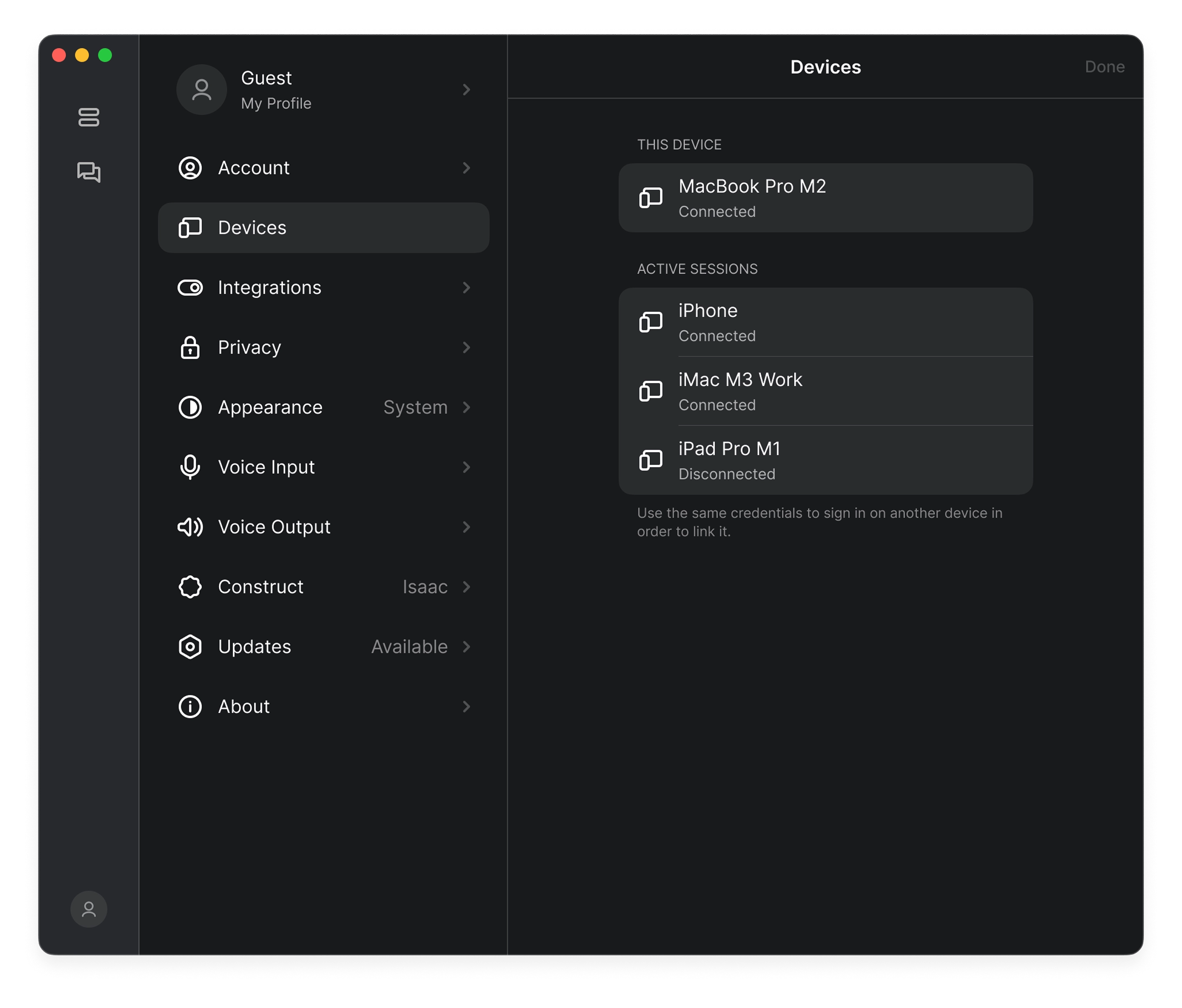
I was the first designer on a six-person team. The product had to run on four platforms from a single Flutter codebase, which turned into the defining constraint of the whole project. Engineers kept hitting things they could not implement across all targets, so the UI had to stay close to what Flutter could guarantee everywhere.
The second challenge was scope. Management wanted a large feature set. My position was the opposite: in a market moving as fast as AI was in 2023 and 2024, shipping fewer features sooner to acquire first users beats building a complete product for months without reaching production. I argued for that repeatedly and did not let it go.
What I did
- Built the design system from scratch covering iOS, iPadOS, macOS, and watchOS, inside Flutter’s constraints.
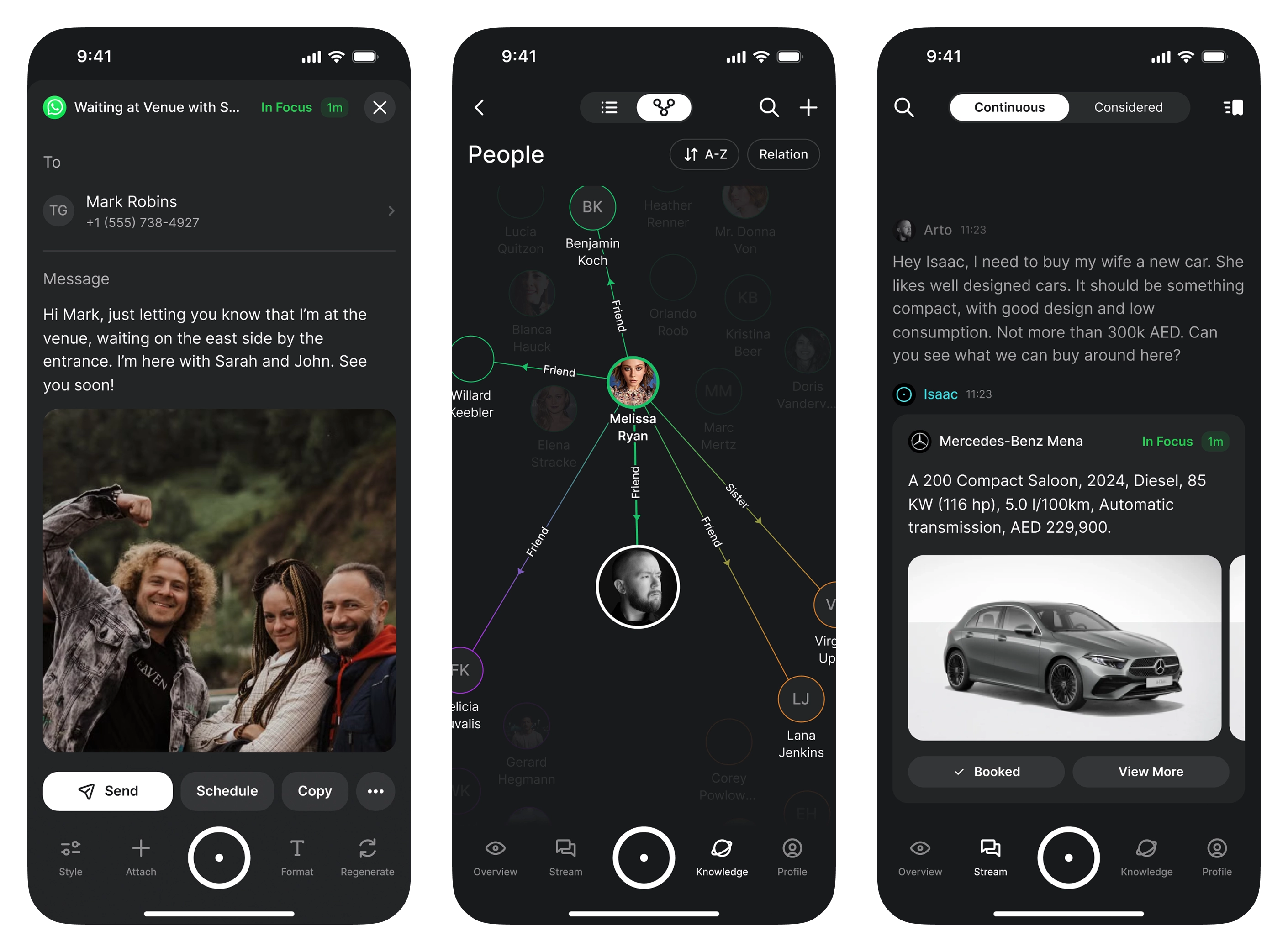
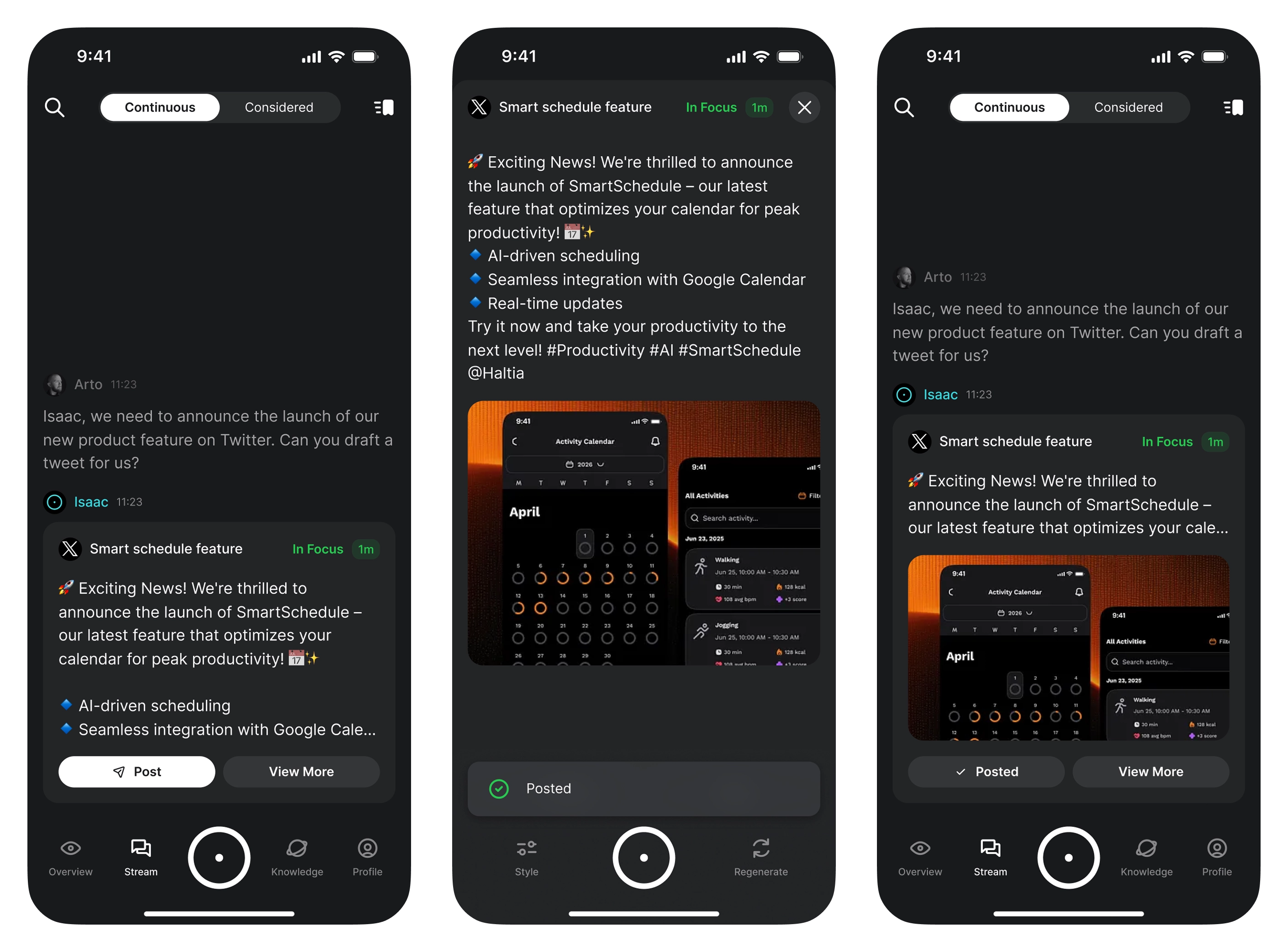
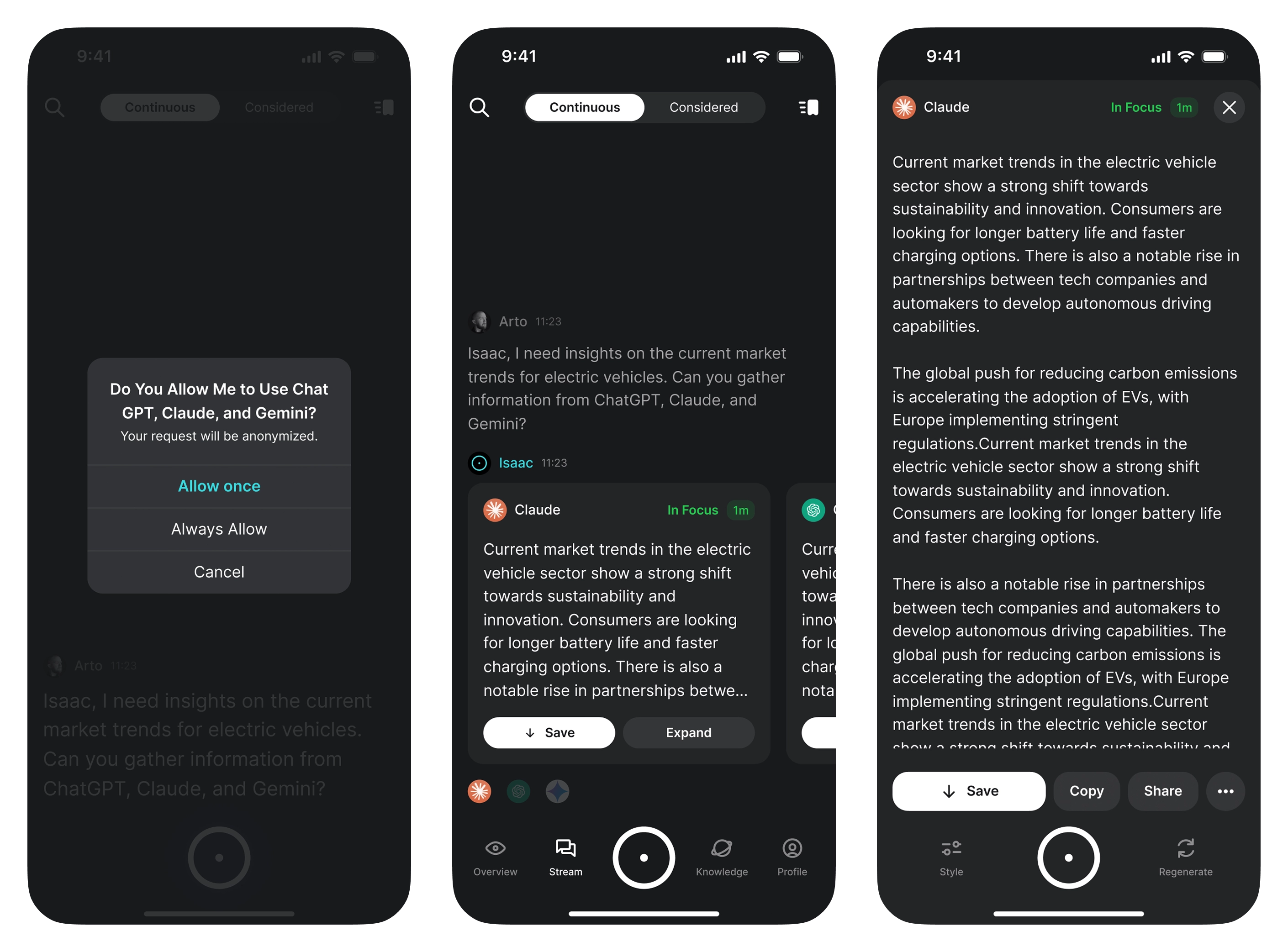
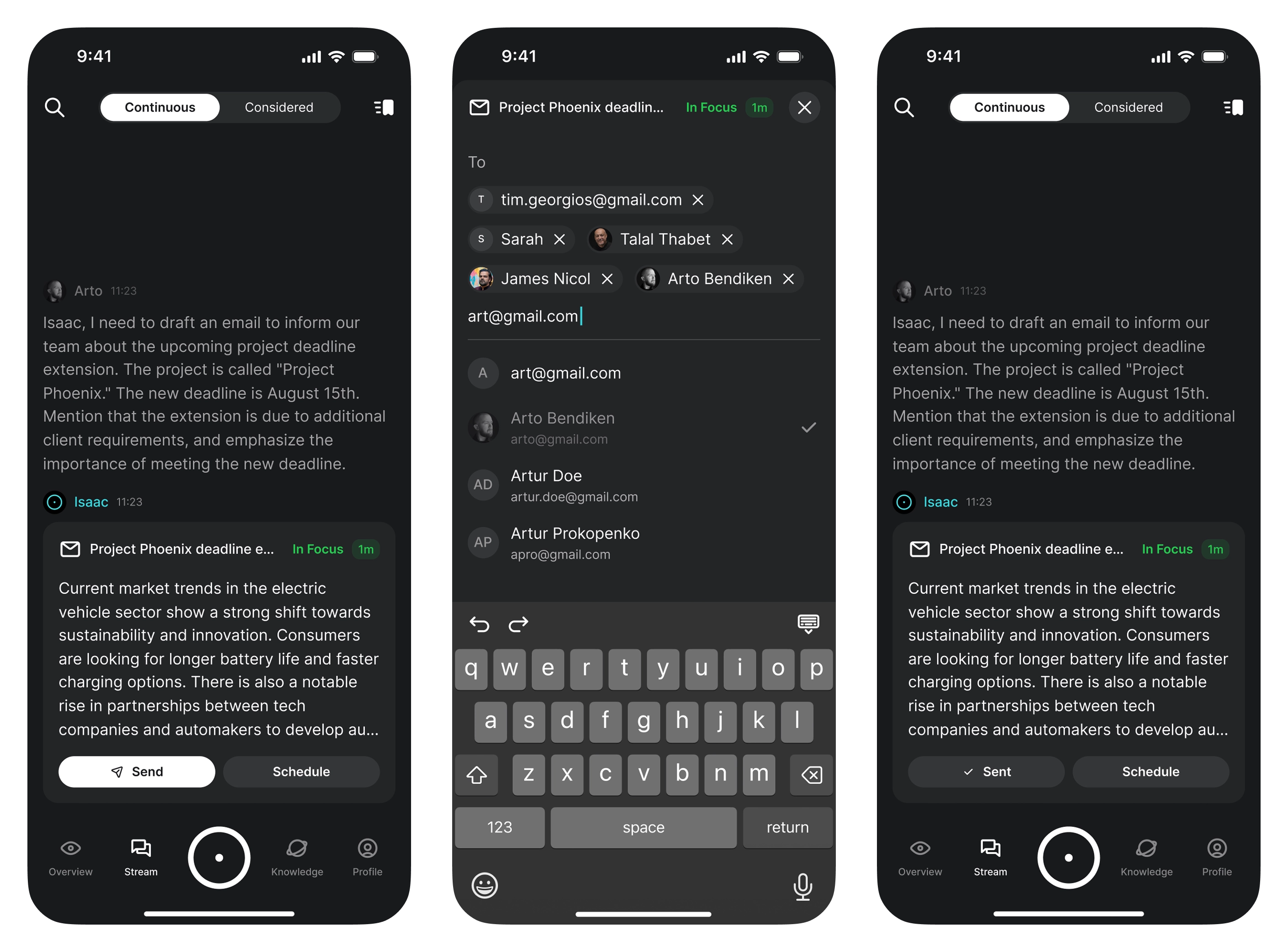
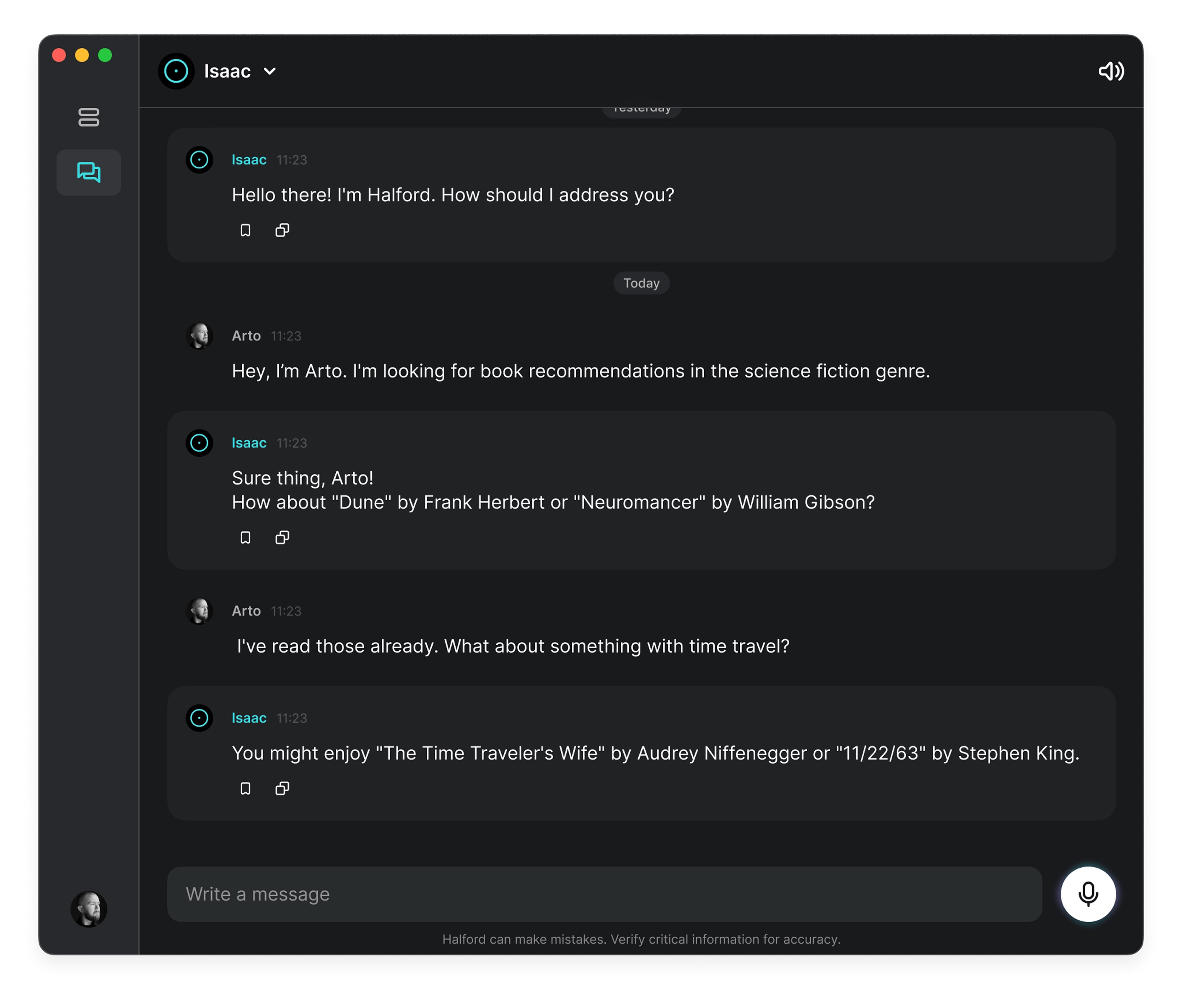
- Designed the core assistant experience with deep integrations into Google Calendar, Gmail, and Google Maps. Users could draft and send email, create and edit meetings, pull saved places, plan routes, and check traffic and travel time without leaving the app, all through AI running securely on the device.
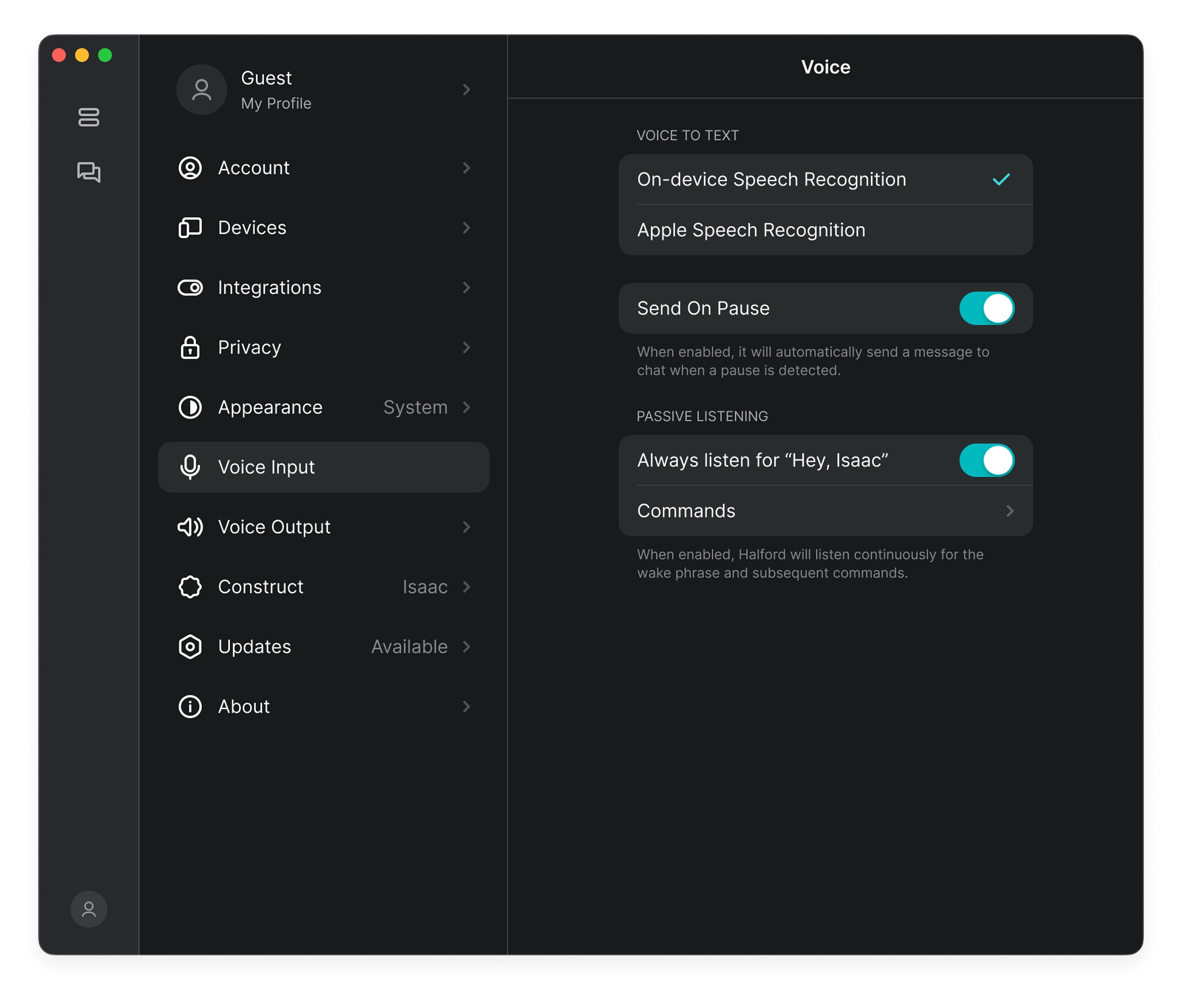
- Worked on running text-to-speech and speech-to-text locally without an API, initially with ElevenLabs technology, eventually with a different solution.
- Worked with a freelance UX researcher and her research to test management’s hypotheses.
- Hired a second designer, and the two of us made a strong design team. They handled documentation and UI production, while I owned design direction, requirements, and stakeholder communication.
- Produced the corporate identity, website, pitch deck, demos, and marketing materials used in fundraising.
Decisions and Trade-offs
Designing for the lowest common denominator across four platforms. Flutter could not deliver the same interactions everywhere. Rather than design per-platform variants, I kept the UI simple enough to work identically on all four. That cost platform-native richness on iOS and macOS, where users expect more. In exchange the team shipped one codebase to four targets without a backlog of implementation exceptions.
Arguing for a smaller product than management wanted. I pushed to cut most of the requested feature set so we could ship, acquire first users, and retain them with regular updates. The AI market was moving very fast, and I believed it was more important to show steady progress than to spend months building extra features and lose that time.
Results
- Took the product from zero to a working beta with local on-device AI running without an internet connection, which had no equivalent on the market at the time.
- Beta prototypes running on iOS, watchOS, and macOS. The demo app, design, and pitch materials contributed to a $2M public investment round (source).
- User testing confirmed interest in the privacy-first approach twice: before development started, and again when we tested the demos. A strong signal that the direction was right.
- One design system serving four platforms from a single codebase.
Key Learnings
Control is worth less than it looks if the platform cannot deliver it.
Building the design system from scratch gave me a lot of control. What I did not account for was how many limits Flutter had, and our engineers ran into them constantly. An existing design system that is better integrated with Flutter might have been the better starting point. That is a hypothesis, not a certainty, but next time I would test it before committing to a custom system.