Pulse
A stealth-mode Web3 startup building a native iOS app for trading AI-focused assets: stocks, crypto, and prediction markets. No KYC, auto-generated wallets.
Snapshot
- Role
- Founding Designer
- Team
- CEO, CTO, one iOS engineer
- Duration
- 7 months
- Platform
- Native iOS, built on iOS 26
- Scope
- 20+ flows, two design specs, brand assets
- Status
- TestFlight, not publicly released
Context and Challenge
I joined as the first and only designer. What existed was an ideas document generated with AI and two founders with deep blockchain backgrounds. No design assets, no flows, no product definition.
The product had to combine three asset types that normally live in three separate apps: crypto, equities, and prediction markets. On top of that, the founders wanted no KYC and auto-generated wallets, which removes the usual identity-verification friction but introduces a different problem. A user who has never held a non-custodial wallet now owns one without knowing it, and the app has to earn trust without explaining the machinery.
Two constraints shaped how I worked. The founders were running fundraising and partnerships at the same time, so written product detail was thin and most open questions had to be worked out in design before they could be reviewed. And there was one engineer, which meant anything I designed had to be buildable without a second pass.
What I did
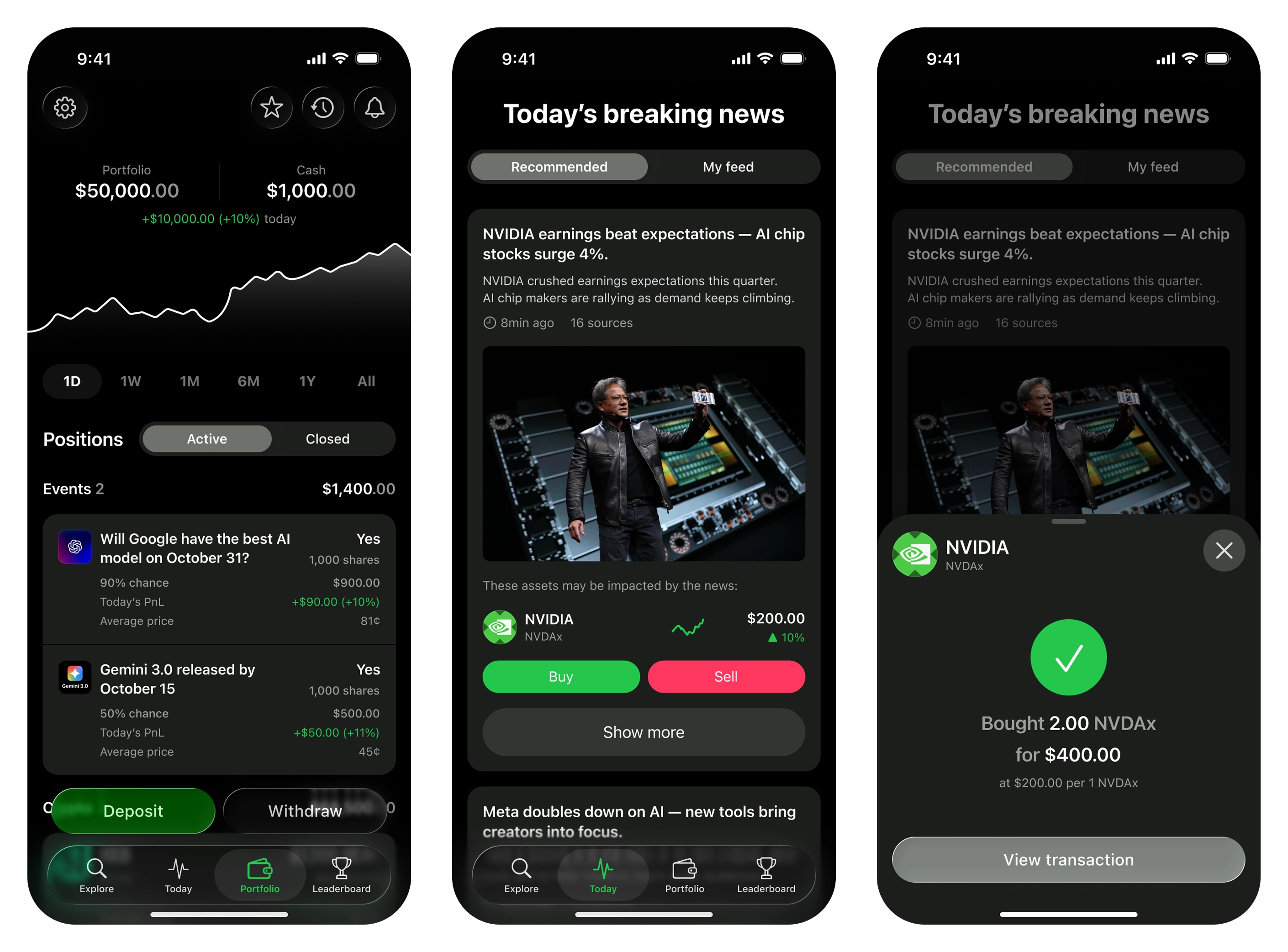
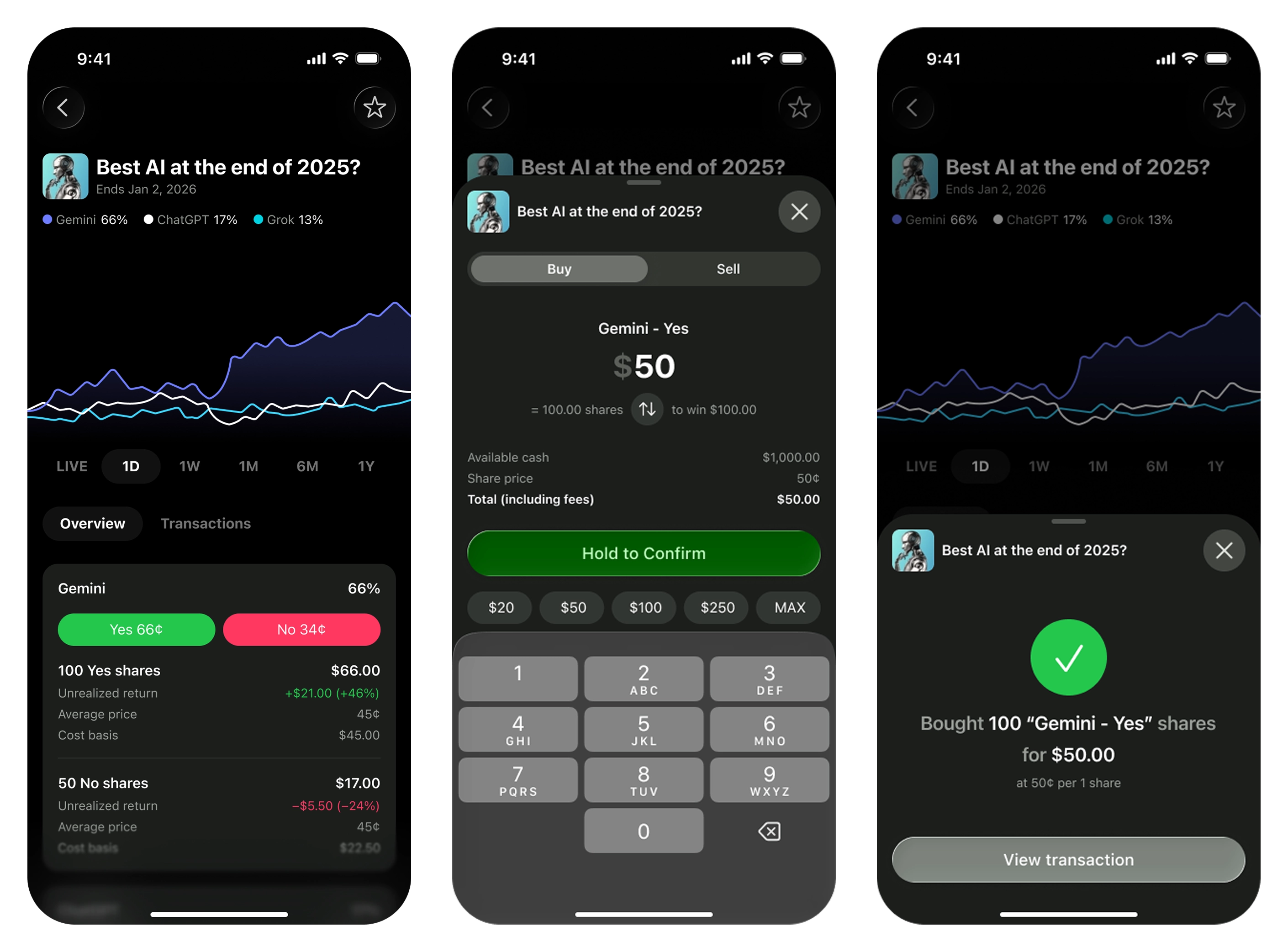
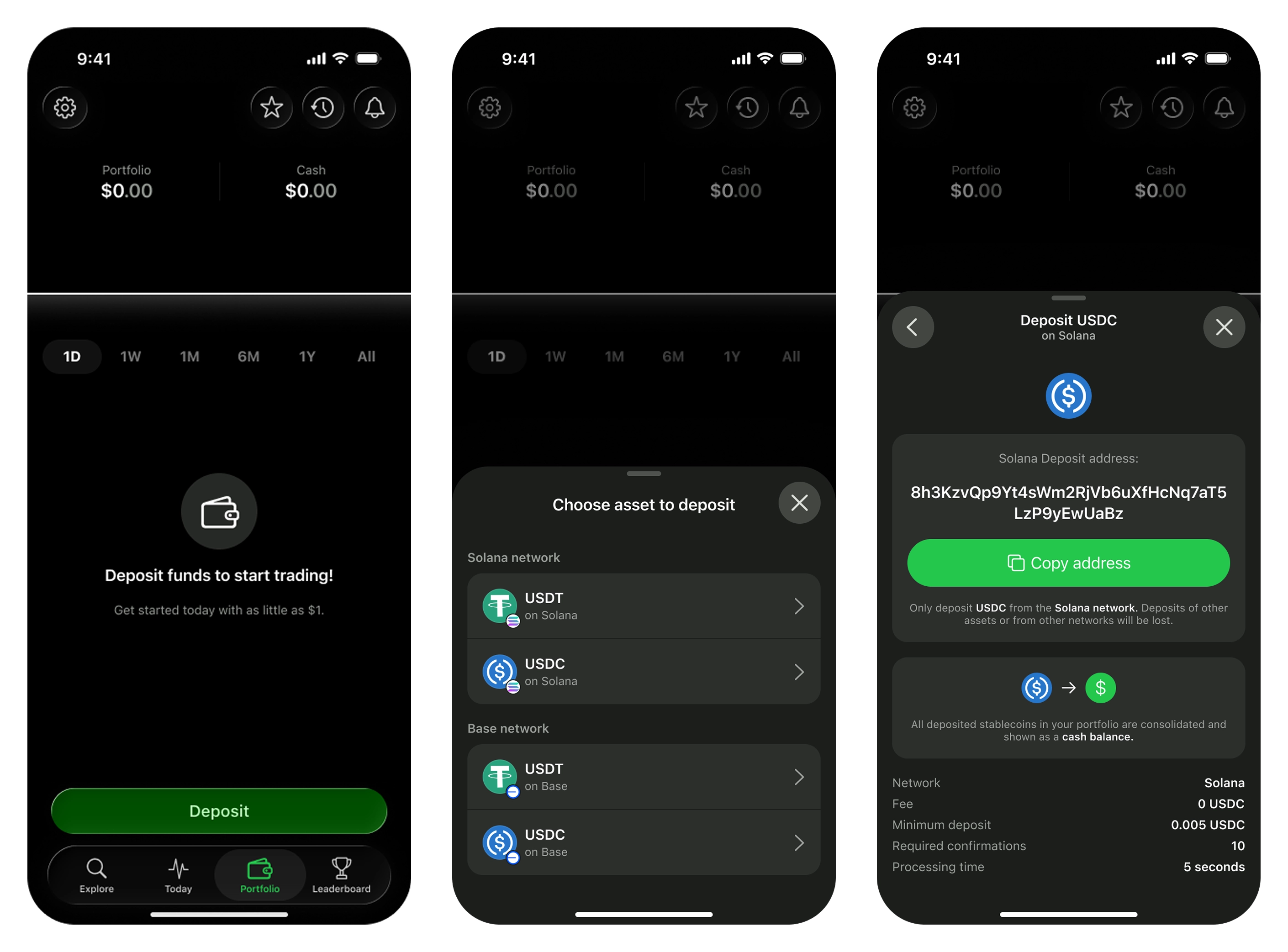
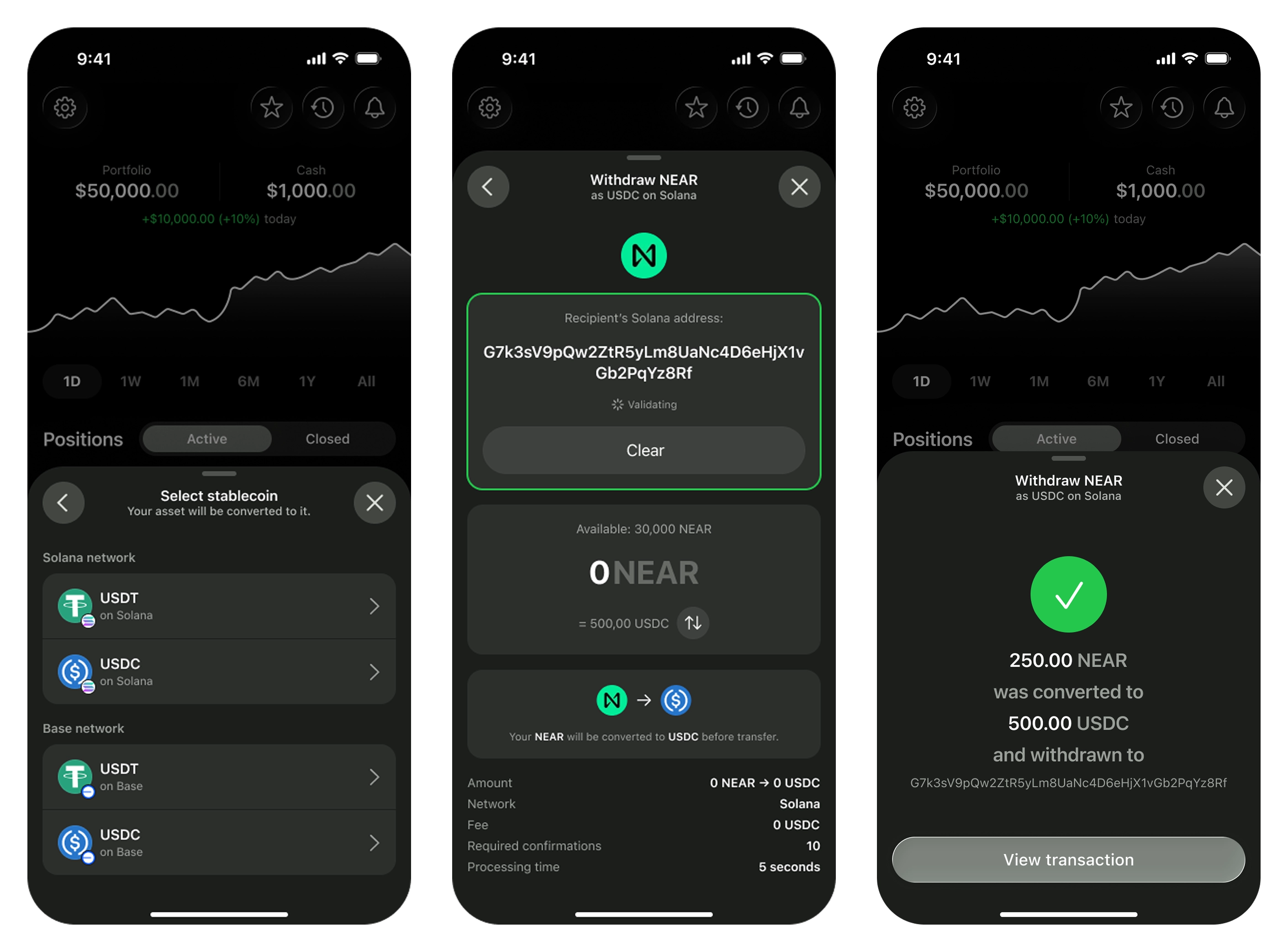
- Translated the ideas document into a fully scoped product across 20+ flows: authentication, trading for all three asset types, portfolio, deposit and withdrawal, transaction history, and a gamified leaderboard.
- Designed the news feed that connects a user’s X account to real-time AI market signals, with tradable asset cards attached to relevant news so users can act without leaving the story. The app was named Pulse after this feature.
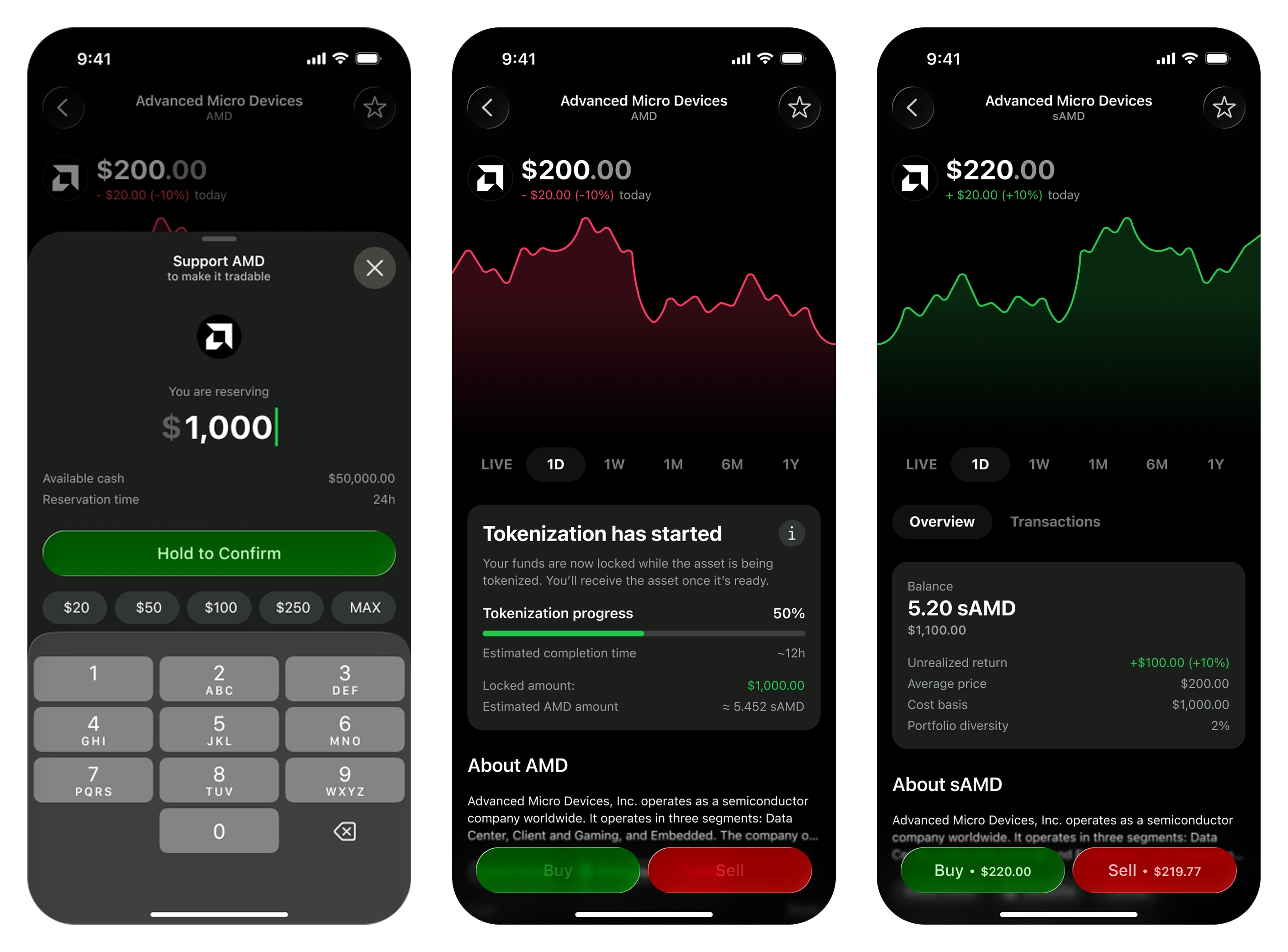
- Conceived and specified the tokenization interest flow: users reserve funds for 24 hours to signal demand for assets that are not yet tokenized. The partner company used that signal to decide what to tokenize next. I documented every stage, state, and edge case.
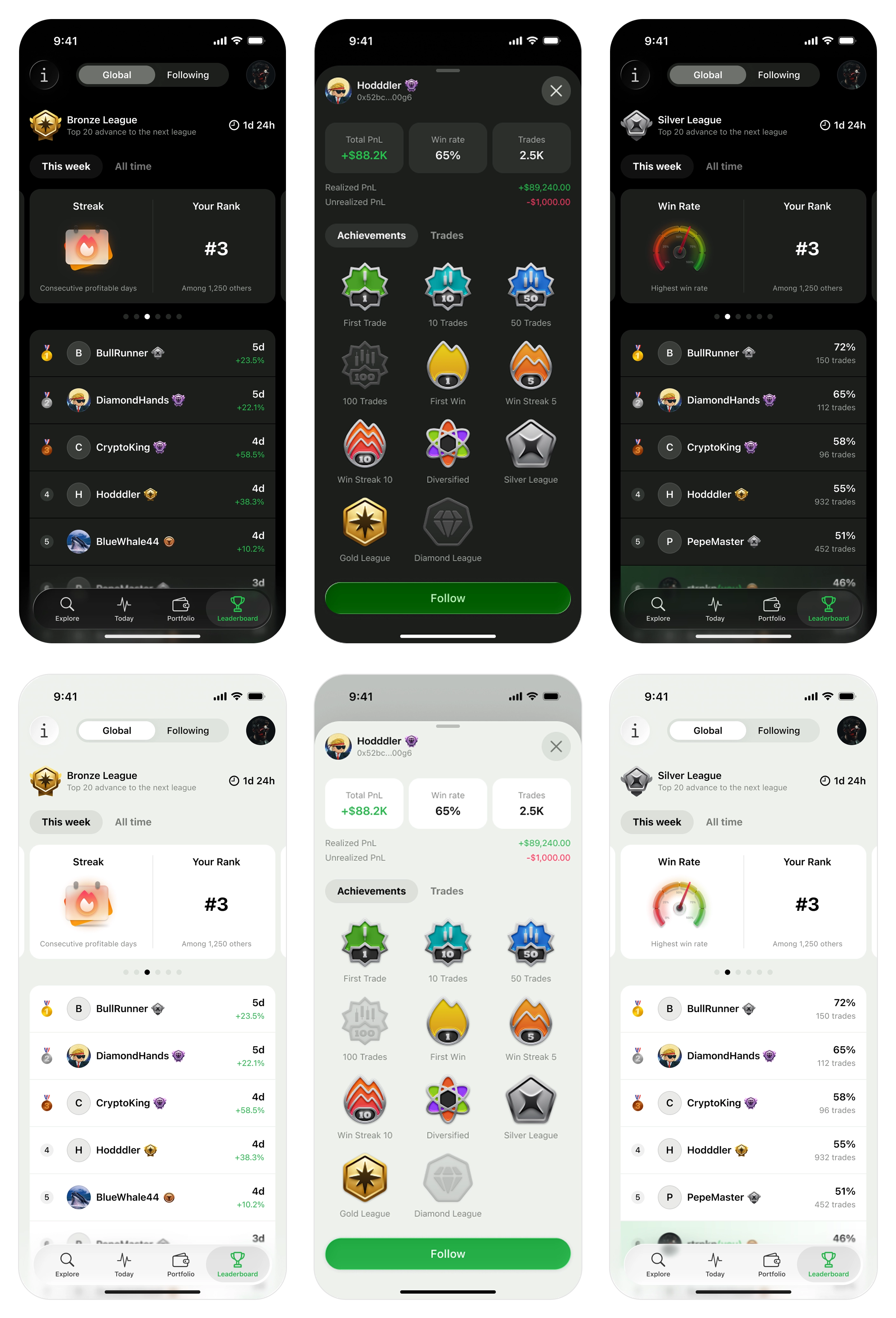
- Wrote the complete leaderboard specification covering league mechanics, promotion and relegation, ranking across six categories, tie-breaking, achievement criteria, privacy settings, and notification logic. Illustrated all league and achievement badges.
- Built UI using Apple’s iOS 26 design system with custom components to extend it, in dark and light themes. Produced the intro animation in Rive and designed the app icon.
- Acted as the translator between the founders and the engineer, turning blockchain concepts and open-ended product ideas into decisions the engineer could build against.
Decisions and Trade-offs
Naming the app Pulse. I proposed the name because the feed lets users keep their finger on the pulse of the AI market and react to news with a trade right inside the feed. That also made the feed, not the order ticket, the home screen.
Protecting delivery after the team changed. Partway through the project the iOS engineer left and development moved to the founders, who were already stretched across fundraising and partnerships. I flagged the delivery risk and proposed cutting predictions, the leaderboard, and other resource-heavy features to focus on the news feed and the tokenization flow. That narrower scope also strengthened the mutual dependency with the tokenization partner and matched what investors were asking to see. The founders accepted it.
Resolving ambiguity in design rather than in meetings. There was little written product detail to work from, so a lot of the product had to be defined in the design itself and then taken to the founders as a concrete proposal. Bringing them a decision to react to moved faster than bringing them a question.
Results
- Shaped roughly 80% of the product end-to-end, solo, from a rough ideas document to a designed prototype across 20+ flows.
- The scope reduction kept the project aligned with partner and investor priorities at the point where it could have drifted.
- Two complete feature specifications that the engineer could build from without design clarification rounds.
- The app reached TestFlight and has not been publicly released.
Key Learnings
Read delivery capacity early, not when the risk shows up.
I scoped the product against what it should be rather than against how much the team could realistically build in the time available. By the time I proposed the scope cut it was a rescue; done two months earlier it would have been planning, and we would have spent those two months on the features that survived.
A written specification is usually cheaper than another meeting.
Documenting every state and edge case for the leaderboard and the tokenization flow took days, but it kept decisions in one place instead of scattered across calls where details quietly go missing. With a single engineer and limited review time, that was the difference between work getting built once and getting built twice.